

The Rom-Com Architect
Where did the romance go.

From Tom Hanks in Sleepless in Seattle to Keanu Reeves in The Lake House, architecture wasn’t just a job description; it was a personality trait. It signalled stability, intellect, and, crucially, artistic sensitivity.
But look around the pop culture landscape today. The Architect has vanished.
How did the profession lose its main character energy?
Did the culture change, or did the brutal reality of the job finally crush the fantasy?
Why was architecture the go-to career for screenwriters?
Because it was the perfect narrative. It sat perfectly between “starving artist” and “corporate drone.” An architect was creative enough to be soulful but employed enough to buy the love interest dinner.
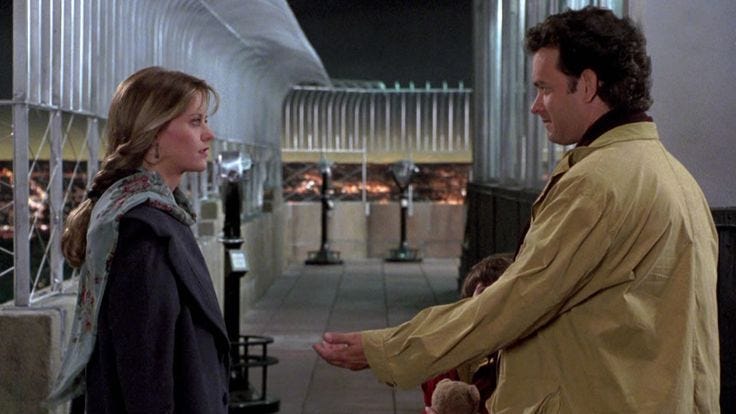
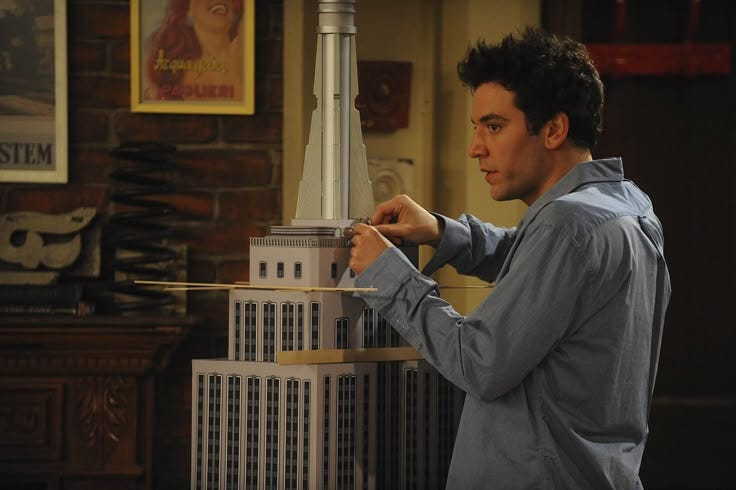
Filmmaking is a visual medium. Watching a guy code is not the most interesting thing to do, but watching a guy build a physical model of a skyscraper or point at a construction site is cinematic.
The architect is usually fighting for “integrity” against a “greedy developer.” This makes them the underdog hero, fighting for art in a world of commerce.
Somewhere around 2010, the cultural definition of “visionary” shifted. The people changing the world weren’t designing a library anymore; they were designing apps. The Social Network replaced The Fountainhead. Architecture began to feel “old world” and slow compared to the speed of Silicon Valley.
The 2008 financial crisis decimated the construction industry. Suddenly, architecture wasn’t associated with sleek high-rises and romantic lofts; it was associated with stalled projects, layoffs, and economic precarity. The “stable” part of the “stable artist” equation evaporated.
In the 90s, we didn’t know what architects actually did. We just saw the models. Today, social media has exposed the “unsexy” underbelly of the profession.
We learned that for every “Ted Mosby” designing a skyscraper, there are thousands of exhausted junior architects spending 12 hours a day strictly formatting bathroom tile layouts in AutoCAD.
The biggest killer of the romantic image might be the industry itself. Architecture has long relied on a “passion tax, the idea that because the work is “art,” you should be willing to suffer for it.
In uni, architecture students are conditioned to brag about not sleeping. This bleeds into professional life. It is hard to be a dashing romantic lead when you haven’t slept in 36 hours.
For a profession that requires nearly as much schooling as medicine or law, the entry-level pay is shockingly low. The “wealthy architect” trope in movies was largely a lie, and the younger generation is beginning to reject the “suffering artist” narrative.
The Architect was a beautiful lie, a perfect Hollywood construct that allowed for creativity without the chaos of true artistry, and money without the cynicism of pure commerce. But in the past decade, a shift in cultural values, a financial collapse, and the light of transparency have all combined to expose the reality of the profession.
This article comes at the perfect time. What if architects coded with AI?
Your image of the socially romantic and visionary architects being crushed by the pressures of industry and developers has come quite coincidently for me. I just watched an old Indian film written by Arundhati Roy - 'In which Annie gives it those ones' where it depicts Annie an architecture student with visionary ideas of how architecture can serve the less fortunate in India. His ideas however are consistently rejected by the principal consequently leading him to have to retake his final year 4 times. Although the film depicts an older architectural educational system, it would be interesting to see your take on how architecture education has been shaped? its future? and what kind of architects are produced from the system?
From someone who is planning on studying architecture, would love to get your opinion. Also highly recommend the film : )